How Lot Slope Can Affect Drainage in Dacula
October 1, 2026
October 1, 2026
You're standing in a backyard that looks like a pool table. No slope, no low spots, grass running level all the way to the property line. Compare that to the yard two subdivisions over, the one with a rise near the fence line and a dip toward the back, where the builder had to terrace part of the lot just to make the patio sit flat. Which one costs less to own?
Most buyers pick the flat one without thinking twice. It looks easier, but a level yard may still need engineered drainage to manage water.
A lot that reads as effortlessly level to the eye has one serious problem: water has nowhere to go on its own. Slope is what moves rainfall away from a foundation. Take it away and every drop that lands on the property has to be told where to go by something other than gravity, which means pipe, stone, and sometimes a pump.
That distinction shows up clearly once you compare specific parts of Dacula against each other. On the flatter infill lots along the east side of Dacula Road, one local pool contractor's own site surveys have measured a total grade change of less than 18 inches across 60 feet of yard. That's close enough to dead level that, in the contractor's words, the drainage system has to do all the work the land isn't doing on its own. Compare that to lots in Hamilton Mill, where the same surveys found contour differences of 8 to 12 feet across a single backyard, natural terrain doing most of the drainage work before an engineer ever gets involved.
Chandler Ridge splits the difference in an inconvenient way. According to that same contractor's four years of site surveys there, roughly 30 percent of lots slope toward the house rather than away from it, meaning the yard's natural grade is actively working against the foundation instead of protecting it.
None of this is cosmetic. It changes what has to get built into the lot before it functions as a yard.
Dacula isn't a dry climate that happens to have flat spots. The area sees roughly 52 inches of rain a year spread across about 115 rain days, with storms capable of dropping 2 to 3 inches in a single afternoon. On a sloped lot, that water runs off toward a swale or a low point and keeps moving. On a flat lot, it sits, unless something is built to move it artificially.
That's where dry wells and sump systems come in, and they aren't one-size solutions. The sizing rule one Dacula-based pool installer uses calls for 1 cubic foot of void storage for every 50 square feet of hardscape in this rainfall zone, scaled up to 1.5 cubic feet per 50 square feet if a percolation test comes back slower than 1 inch per hour, which is common on the area's clay-heavy soil. On the roughly 30 percent of Chandler Ridge lots where the yard actually slopes toward the house, a dry well isn't enough by itself. Those properties need an active pump: an 18-inch-diameter, 24-inch-deep sump pit, a submersible pump, and a discharge line running at least 20 feet from the foundation, with a float switch triggering the pump at 12 inches of standing water and cutting off at 4 inches.
Even the placement of the drainage itself is engineered, not eyeballed. The standard setback between drain stone and a house footing is 18 inches. Any closer and the stone starts undermining the foundation. Any farther and you leave a strip of yard that still has to shed water perfectly, with no margin for error in the pitch.
Drainage needs can become apparent when someone plans to add a patio, a deck, or a pool, or during storm season if they were not addressed earlier.
| Flat infill lots (e.g., east Dacula Road) | Sloped, established lots (e.g., Hamilton Mill) | |
|---|---|---|
| Natural grade change | Under 18 inches across 60 feet | 8 to 12 feet across a single backyard |
| How water leaves the lot | Has to be engineered (dry well, French drain, or pump) | Largely handled by natural contour |
| Added system often required | Dry well sized to rainfall, sometimes a sump pump with float switch | Standard swale grading, rarely more |
| What triggers the cost | Any hardscape addition: patio, deck, pool | Usually none, unless building right at a low point |
| Where the risk concentrates | Lots where yard slopes toward the house (about 30% in Chandler Ridge, per contractor surveys) | Minimal, water already moves away from the structure |
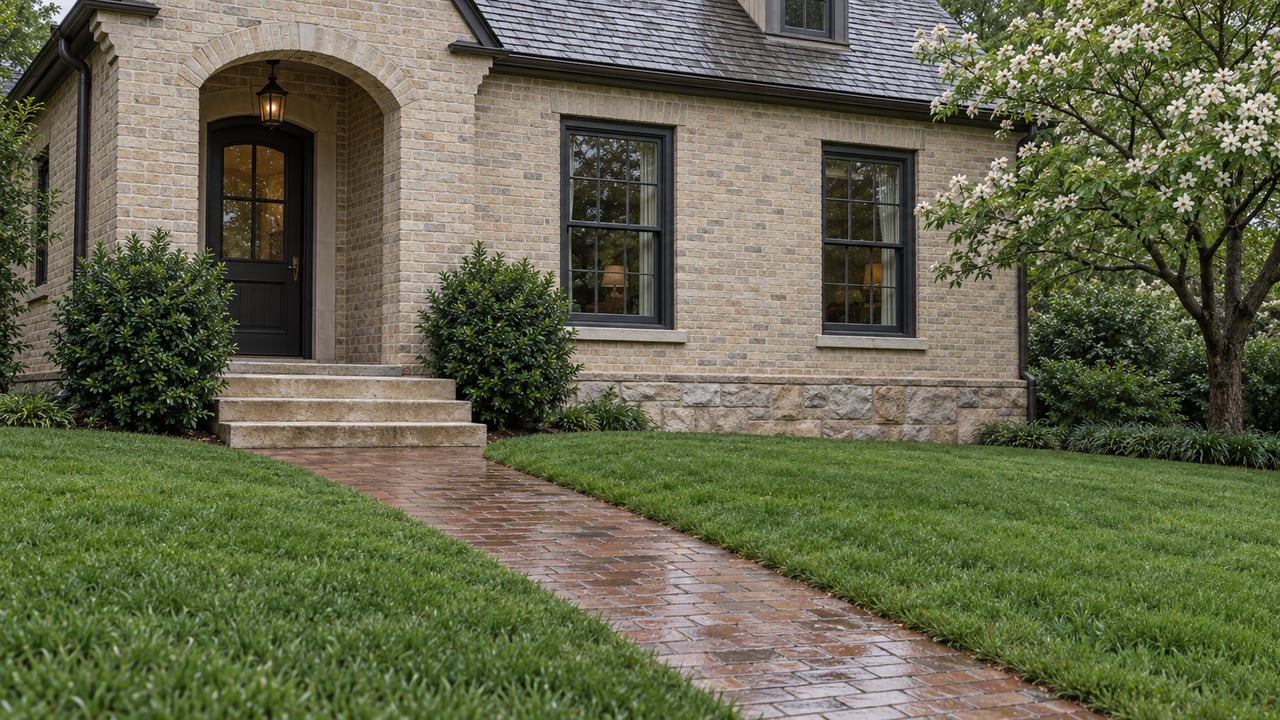
The lot on the left isn't defective. Its drainage needs may differ, and those differences can affect the cost of adding features to the yard.
As of September 14, 2026, the Dacula ZIP code (30019) had 160 active listings against 16 pending sales, a pending-to-active ratio of 0.10 that points to a balanced market where buyers have room to compare and negotiate rather than compete on speed. The median asking price of those active listings was $515,250, while the median of the 502 closed sales tracked over the prior six months came in at $450,000, with the middle half of those sales ranging from $385,000 to $560,000.
That roughly $65,000 gap between what's currently listed and what recently closed isn't a discount buyers are winning at the table. It reflects a difference in what's actually on the market right now versus what sold over the past half year, and part of that difference is the mix of lot types entering the pipeline. Newer construction on flatter infill parcels tends to list at a premium for square footage and finishes, while resales in older, established sections with more natural grade, places like Hamilton Mill, often close at prices that look similar on paper but were never carrying the same built-in drainage cost.
Separately, per-square-foot pricing in Dacula has been reported in the $176 to $186 range depending on the source and month, with a modest year-over-year softening. That range is wide enough to hide a lot-topography difference entirely. Two homes at $450,000 with similar square footage can carry very different total costs once you factor in what the lot itself already required, or will eventually require, to manage water.
Has anyone already engineered this lot's drainage, or is that still ahead of you? On flat parcels, ask directly whether a dry well, French drain, or sump system already exists, and if so, request whatever documentation the installer or builder provided. If nothing exists yet and you're planning a patio, deck, or pool, budget for it before you fall in love with the yard.
Which direction does the yard actually slope relative to the house? This sounds obvious standing in the yard on a dry day, but the difference between a lot that sheds water away from the foundation and one that doesn't often isn't visible without rain on the ground. A one-foot contour survey, not a boundary survey, is the only document that actually answers this. A boundary survey tells you where the property lines sit. It says nothing about where water goes when it rains.
If it's new construction, has the city's grading plan been filed? Dacula's development regulations require site grading, stormwater detention, and drainage plans to be reviewed before construction, covered under Article 8 of the city's development regulations. That plan is public record. Asking the builder or your agent to pull it before closing costs nothing and tells you exactly what was engineered into the lot, rather than what you're hoping was.
When comparing lots, consider whether drainage has been addressed and how the yard slopes relative to the house.
If you're comparing lots in Dacula and want a second set of eyes on what a particular parcel's topography actually means for your budget, Pike Premier Real Estate can walk it with you before you write an offer. Schedule a Free Consultation with Beverly Davison to talk through the specific lot you're considering.
This article is general information, not legal, tax or financial advice. Consult a qualified professional about your situation.
Stay up to date on the latest real estate trends.


Get assistance in determining current property value, crafting a competitive offer, writing and negotiating a contract, and much more. Contact me today so I can guide you through the buying and selling process.